Quick Navigation


The Yamaha XSR 155 is a retro-styled motorcycle that combines a classic motorcycle silhouette with modern Yamaha engineering. It is designed for riders who want the visual character of a heritage motorcycle without giving up the convenience and performance expected from a contemporary 155cc machine.
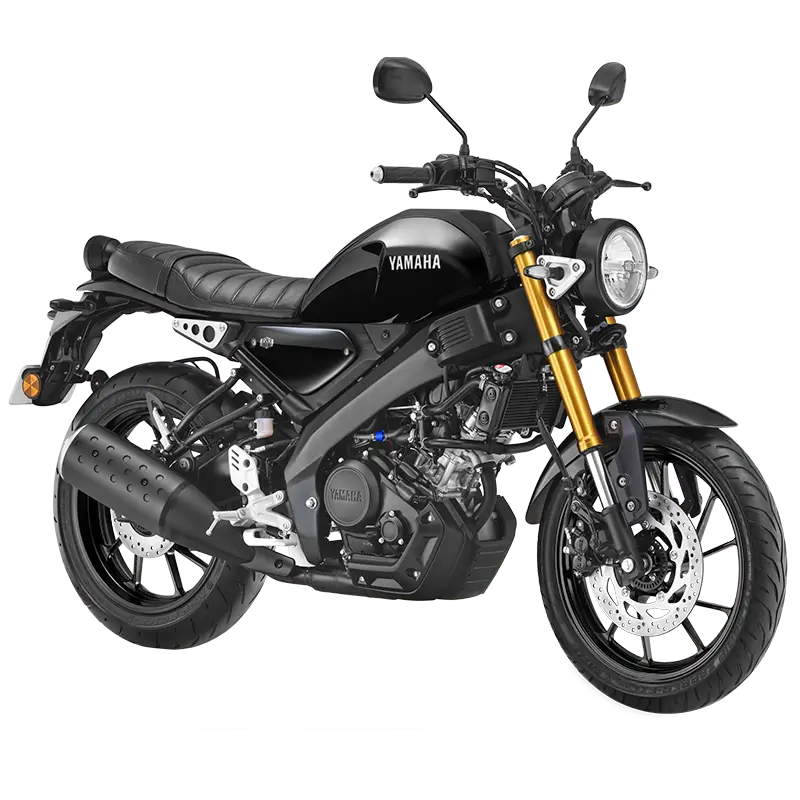
The XSR 155 stands out because its design is deliberately different from a conventional street motorcycle. It uses a rounded headlamp, a sculpted tank, a tuck-and-roll style seat, a compact tail and a digital instrument cluster. Underneath the styling, Yamaha uses a liquid-cooled, fuel-injected, four-valve engine with Variable Valve Actuation (VVA), a six-speed transmission, a Deltabox frame and disc brakes with dual-channel ABS.
For Indian buyers, the most important point is that Yamaha's India website currently lists the XSR 155 as a product and provides an India-specific specification set. The official Yamaha India product page lists five colour choices and describes the motorcycle's key technology, while the Yamaha e-shop currently indicates that online stock availability can vary by state or city. Therefore, buyers should verify the final quotation and availability with an authorised Yamaha dealer before making a purchase.
Price is one of the biggest reasons people search for Yamaha XSR 155 price in India. Yamaha's India product page provides an ex-showroom price section and notes that prices can change without prior notice. The current Yamaha India search listing has shown an expected figure of ₹1,59,990*; however, the final amount payable by a customer can differ because on-road cost includes items such as registration, insurance and applicable taxes or fees.
Before publishing or updating this page, it is sensible to recheck the official Yamaha India price page because motorcycle prices, variant availability and introductory pricing can change. If you are comparing the XSR 155 with other 150–160cc motorcycles, compare like-for-like figures: ex-showroom against ex-showroom, or on-road against on-road.
The Yamaha e-shop also shows a booking mechanism, but its availability notice says stock can be unavailable for a selected state or city. That means a customer should not assume that a displayed booking option equals immediate dealership delivery.
The design is arguably the strongest reason to consider the XSR 155. Yamaha calls the XSR family a retro-sport category, blending heritage-inspired styling with contemporary engineering. The motorcycle uses a round headlight, a compact tail section, a sculpted tank and a tuck-and-roll seat to create a recognisable old-school appearance.
The tank has a compact, rounded profile rather than the sharply angular shape found on many modern street motorcycles. This gives the motorcycle a distinctive visual identity. The round LED lighting elements continue the theme while providing the advantages of modern lighting technology.
The seat design is another major styling feature. The tuck-and-roll treatment gives the motorcycle a classic appearance while the overall riding position remains intended for everyday road use. Riders who like café-racer or scrambler aesthetics can also explore Yamaha's listed customization kits and accessories.
Yamaha India lists colours including Metallic Black, Metallic Blue, Metallic Grey, Vivid Red and Greyish Green Metallic. Colour and availability can vary, so buyers should confirm the exact option with the dealer.
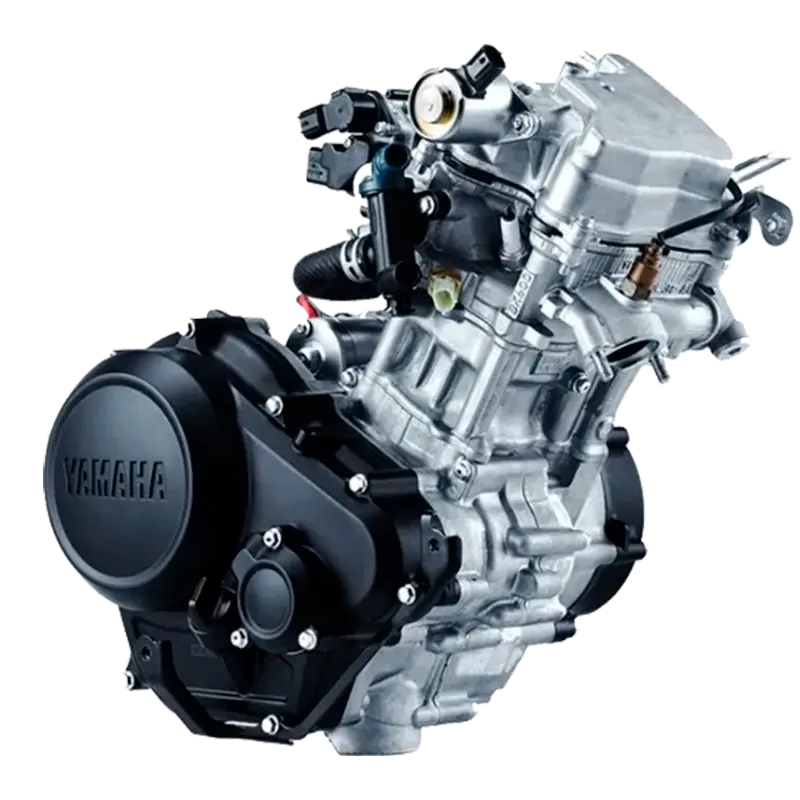
The Yamaha XSR 155 engine is a 155cc, liquid-cooled, four-stroke, SOHC, four-valve single-cylinder unit with fuel injection and VVA. Yamaha's India specification lists a maximum output of 13.5 kW (18.4 PS) at 10,000 rpm and maximum torque of 14.2 Nm at 7,500 rpm.
Variable Valve Actuation is particularly relevant to this engine because it is intended to provide a useful spread of performance across the rev range. Yamaha describes VVA as using different intake valve cam profiles for lower/mid-range and higher engine speeds. In practical terms, the technology is aimed at balancing everyday usability with stronger performance when the engine is revved harder.
The engine uses liquid cooling, which is useful for maintaining more consistent operating temperatures during extended riding. Fuel injection provides precise metering of fuel and is now standard technology in modern motorcycles in this segment.
The XSR 155 uses a six-speed constant-mesh transmission. A six-speed gearbox gives the rider more flexibility in selecting ratios for city riding, open roads and highway cruising. The motorcycle also uses a wet multi-disc clutch, while Yamaha's India specification lists an assist-and-slipper clutch system. The slipper function can help reduce the effects of aggressive engine braking during rapid downshifts.
Yamaha XSR 155 mileage is not a single fixed number because real-world fuel economy depends on traffic, rider weight, tyre pressure, riding style, road conditions, maintenance and average speed. Yamaha's India product information includes a fuel-consumption indicator and Y-Connect functionality, which can help riders monitor consumption rather than relying on a single claimed mileage figure.
For the most useful mileage test, fill the tank to the same level, reset the trip meter, ride through your normal mix of traffic and highway conditions, and calculate kilometres divided by litres used at the next refill. Repeating this over several tanks gives a much better picture than a one-time test.
Gentle acceleration, correct tyre pressure, timely engine-oil changes, a clean air filter and avoiding unnecessary high-rpm riding can all help fuel economy. Conversely, frequent hard acceleration, heavy traffic, prolonged idling and under-inflated tyres can reduce mileage.
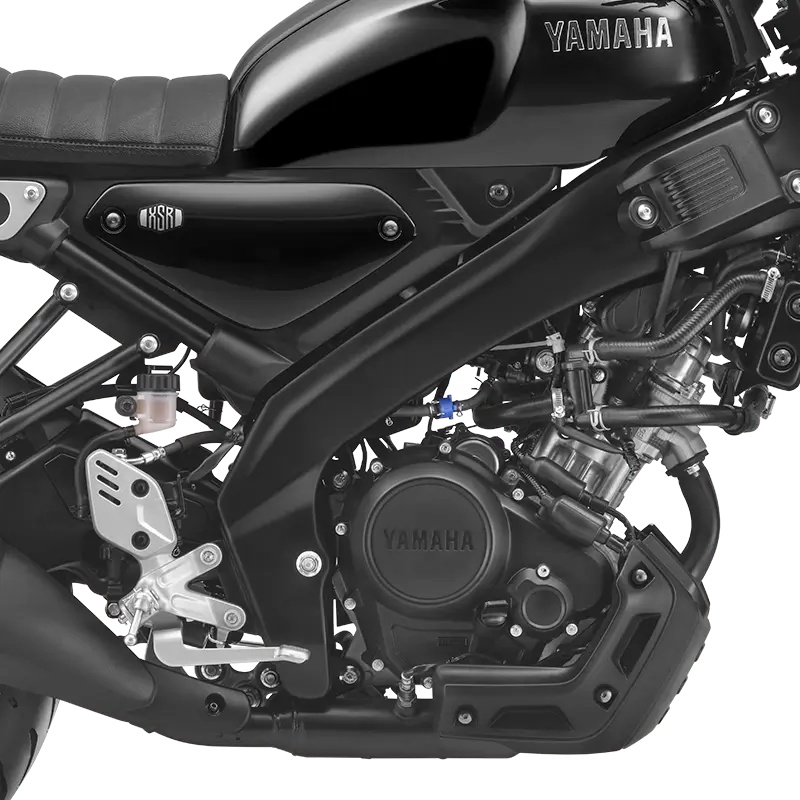
The XSR 155 uses Yamaha's Deltabox frame architecture and a telescopic upside-down front fork. At the rear, it uses a swingarm with link suspension. The chassis specification is intended to provide a balance between responsive handling and everyday road usability.
The front upside-down fork is visually distinctive and can provide useful stiffness and road feedback. The rear link-type suspension helps manage the rear wheel's movement while keeping the motorcycle's overall proportions compact.
The official India specification lists a 1,325 mm wheelbase, 810 mm seat height and 137 kg kerb weight. These numbers place the motorcycle in a manageable size and weight range for riders who want a full-size manual motorcycle without moving into a heavier 250cc-plus class.
Ground clearance is listed as 170 mm at unladen kerb weight and 120 mm at laden vehicle weight in Yamaha's detailed India specification. This distinction matters because ground clearance changes when the motorcycle is carrying a rider and pillion.
Braking hardware is another important part of the XSR 155 specification. Yamaha India lists a 282 mm front disc and a 220 mm rear disc, together with dual-channel ABS. ABS is designed to reduce the likelihood of wheel lock during hard braking, particularly when grip is limited.
The India specification lists a 100/80-17 front tubeless tyre and a 140/70R-17 rear tubeless tyre. The wide rear tyre contributes to the motorcycle's muscular appearance and provides a substantial contact patch for road riding.
Tyre pressure should always be maintained according to Yamaha's recommended values rather than a generic motorcycle chart. Correct pressure is important for braking, steering feel, tyre life and fuel efficiency.
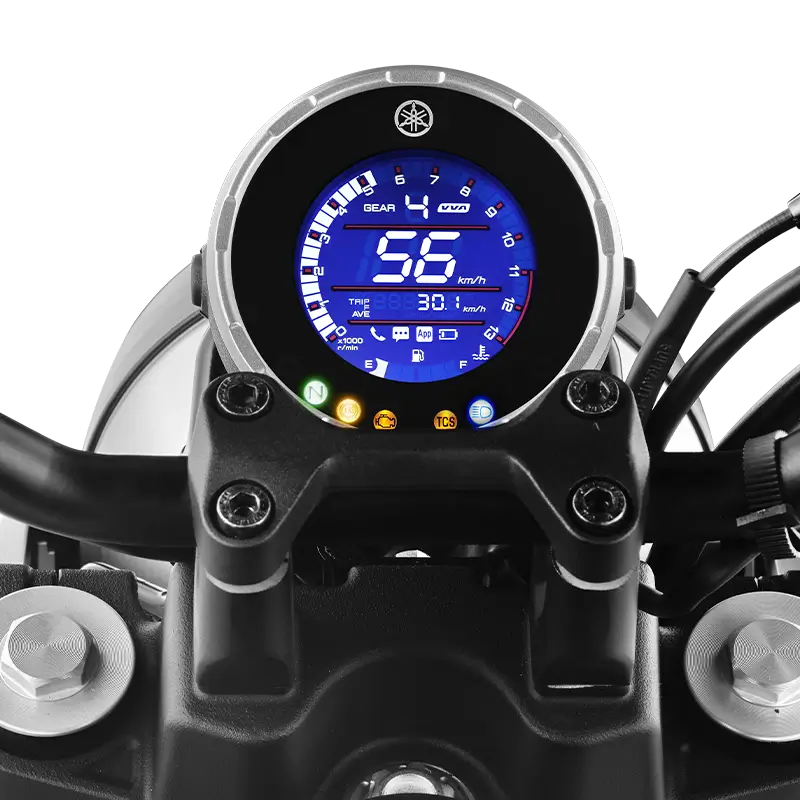
Although the XSR 155 looks intentionally old-school, its equipment is modern. The motorcycle features a round digital LCD meter, LED lighting, fuel-consumption information, VVA and Yamaha's Y-Connect smartphone connectivity on the India specification.
Y-Connect can provide information such as call, SMS and email alerts, phone battery status, fuel-consumption tracking, maintenance recommendations, last parking location and motorcycle-related dashboard information. Availability and exact app functions can depend on the applicable Yamaha system, smartphone and software version.
The motorcycle also has an E20 compatibility designation on Yamaha India's current specification. This is relevant for Indian riders because E20 petrol contains up to 20 percent ethanol and is part of India's fuel transition.
Traction control is also listed in Yamaha India's product information. The system is intended to reduce the possibility of excessive wheelspin in conditions such as wet or loose surfaces. Electronic aids do not eliminate the need for sensible riding, correct tyres or appropriate speed.
The Yamaha XSR 155 measures approximately 2,005 mm in length, 805 mm in width and 1,080 mm in height. Its wheelbase is 1,325 mm and the seat height is 810 mm. Kerb weight is listed as 137 kg with oil and a full fuel tank, while fuel capacity is 10 litres.
The 810 mm seat height is worth considering before purchase. Riders should sit on the motorcycle and check whether they can comfortably reach the ground. A motorcycle can be light and narrow yet still feel tall to a shorter rider depending on seat shape and leg length.
The 10-litre tank is suitable for a 155cc motorcycle and can provide a useful touring range, although actual range depends heavily on fuel consumption and riding conditions. The motorcycle's relatively moderate weight can also make manoeuvring at parking speeds easier than on larger retro motorcycles.
One of the XSR 155's advantages for style-focused buyers is customization. Yamaha India lists Café Racer and Scrambler customization kits and a range of individual accessories. Examples shown by Yamaha include a headlight cowl, fly screen, bar-end mirrors, side number plate components, lever guards, a dual seat assembly with hump, engine guard and tank-related accessories.
Customization should be approached carefully. Accessories that alter lighting, number-plate placement, mirrors or other road-safety equipment should be installed according to applicable rules and Yamaha's instructions. The safest approach is to use genuine accessories or professionally fitted components that do not compromise visibility, braking, steering or structural parts.
For city use, the XSR 155 has several characteristics that make sense on paper: a moderate 137 kg kerb weight, a 155cc engine, a six-speed gearbox, fuel injection, ABS and a relatively compact wheelbase. The upright retro-roadster concept also makes it more approachable for everyday riding than a committed supersport riding position.
The motorcycle's styling can be especially appealing to riders who want something more distinctive than a conventional commuter. The digital display and smartphone connectivity add modern convenience without changing the visual character of the bike.
In dense traffic, the main consideration is clutch and throttle smoothness. The assist-and-slipper clutch can make repeated gear changes easier, but the XSR remains a manual motorcycle and requires active shifting. Riders who want completely effortless stop-and-go commuting may prefer a scooter, while riders who enjoy involvement should find the six-speed layout more engaging.
The XSR 155 can also make sense for short and medium-distance touring. Its 10-litre tank, six-speed gearbox, liquid-cooled engine and digital information display give it a useful touring foundation. The upright roadster concept is also more natural for relaxed riding than a fully faired supersport.
However, prospective touring riders should remember that this is still a 155cc motorcycle. It is designed around accessible performance rather than the effortless high-speed cruising of a larger 300–500cc motorcycle. Wind protection is limited because the XSR is essentially a naked/retro roadster, although Yamaha lists a fly screen as an accessory.
For touring, tyre condition, chain lubrication, engine oil, brake pads and luggage mounting should be checked before every long trip. Heavy luggage can affect handling and braking, so the motorcycle should not be overloaded beyond Yamaha's recommendations.
Pros
- Distinctive retro-modern styling.
- 155cc liquid-cooled four-valve engine with VVA.
- 18.4 PS peak power in the India specification.
- Six-speed gearbox.
- Assist-and-slipper clutch.
- Upside-down front fork and Deltabox frame.
- Dual-channel ABS with front and rear disc brakes.
- LED lighting and round digital LCD instrumentation.
- Y-Connect smartphone connectivity.
- Wide range of colours and customization possibilities.
Things to consider
- 810 mm seat height may not suit every rider.
- Limited wind protection for highway riding.
- Final on-road price varies by location and insurance choice.
- Availability should be confirmed with a Yamaha dealer.
- 155cc performance is aimed at balanced everyday use, not big-bike performance.
The XSR 155 occupies an unusual position in the 150–160cc category because its design is a major part of the product. Many motorcycles in this displacement range focus primarily on sporty, streetfighter or commuter styling. The XSR instead targets riders who want a retro motorcycle appearance combined with modern chassis and electronics.
When comparing it with another motorcycle, do not compare only engine displacement or peak power. Consider seat height, kerb weight, ABS configuration, suspension, tyre sizes, gearbox, service network, insurance cost, spare-parts availability and your intended use. A motorcycle with slightly more power may not be the better choice if its riding position or ownership cost does not suit you.
The XSR 155 is particularly attractive for someone who values design and wants a motorcycle that can be personalized. On the other hand, a rider who prioritizes maximum wind protection, touring luggage capacity or outright performance may prefer a different category.
Yamaha XSR 155 Specifications
| Parameter | Specification |
|---|---|
| Engine type | Liquid-cooled, 4-stroke, SOHC, 4-valve, single-cylinder |
| Displacement | 155 cc |
| Bore × stroke | 58.0 × 58.7 mm |
| Compression ratio | 11.6 : 1 |
| Maximum power | 13.5 kW (18.4 PS) @ 10,000 rpm |
| Maximum torque | 14.2 Nm @ 7,500 rpm |
| Fuel system | Fuel injection |
| VVA | Yes |
| Starting system | Electric starter |
| Clutch | Wet multi-disc; Assist & Slipper |
| Transmission | 6-speed constant mesh |
| Frame | Deltabox |
| Front suspension | Telescopic upside-down fork |
| Rear suspension | Swingarm (link suspension) |
| Front brake | 282 mm disc |
| Rear brake | 220 mm disc |
| ABS | Dual-channel |
| Front tyre | 100/80-17M/C 52P, tubeless |
| Rear tyre | 140/70R-17M/C 66H, tubeless |
| Overall length | 2,005 mm |
| Overall width | 805 mm |
| Overall height | 1,080 mm |
| Wheelbase | 1,325 mm |
| Seat height | 810 mm |
| Ground clearance | 170 mm unladen; 120 mm laden |
| Kerb weight | 137 kg |
| Fuel tank | 10 litres |
| Battery | 12V, 4.0Ah (10HR) |
| Headlight / tail light | LED / LED |
| Instrument cluster | Round digital LCD |
| Connectivity | Y-Connect / smartphone Bluetooth |
| Traction control | Yes |
| E20 compatible | Yes |
The Yamaha XSR 155 is best suited to riders who want a stylish manual motorcycle for daily riding, weekend rides and occasional touring. It makes sense for someone who values retro styling but does not want to sacrifice features such as fuel injection, liquid cooling, ABS, digital instrumentation, smartphone connectivity and modern suspension hardware.
It is also a good candidate for customization enthusiasts. The factory accessory ecosystem makes it possible to move the visual theme toward a café-racer or scrambler-inspired appearance without starting with a completely different motorcycle.
It may be less suitable for someone who wants the lowest possible purchase price, scooter-like convenience or strong wind protection. Those buyers should compare other motorcycles before deciding.
Like any performance-oriented motorcycle, the XSR 155 should be maintained according to Yamaha's service schedule. Regular checks should include engine oil, coolant, chain condition and lubrication, tyre pressure, brake-pad condition, brake-fluid level, battery health, lights and fasteners.
Chain maintenance is particularly important on a chain-driven six-speed motorcycle. A clean and correctly lubricated chain can contribute to smoother power delivery and longer component life. Riders should also avoid pressure-washing sensitive electrical connectors and should follow Yamaha's cleaning recommendations.
Because the XSR uses liquid cooling, coolant level and cooling-system condition should not be ignored. If the temperature warning indicator appears or the engine behaves abnormally, stop safely and investigate rather than continuing to ride.
For connected features, keep the Yamaha app and compatible smartphone software updated when required. Connectivity should be considered a convenience feature rather than something that affects the motorcycle's basic ability to operate.
Official Sources & Verification
For the latest price, variant availability and specifications, verify details on Yamaha's official India product page and e-shop before publishing an updated price statement.
- Yamaha Motor India – XSR 155 official product page
- Yamaha Motor India e-shop – XSR 155
- Yamaha XSR 155 official brochure
Editorial update: August 31, 2026. Recheck price and availability before publishing any future update.